How to tell if hail damaged your roof (and what to do in the first 48 hours)
Hail damage on asphalt shingles looks like random dark bruises with granules knocked away, soft spots you can feel with a thumb, and dents in gutters, downspouts and vent caps. Adjusters count hits inside 10-by-10-foot test squares on each slope; roughly eight or more hits per square usually qualifies that slope for replacement. Document everything with photos, avoid climbing the roof yourself, and get a HAAG-certified inspection before you file.

Start on the ground, not the roof
Most hail evidence is visible from the ground and it is safer to look there first. Check the soft metals: gutters, downspouts, mailbox, AC condenser fins, window screens and the metal caps on roof vents. Hail that dents aluminum gutters almost always damaged the shingles above them. Look at the driveway and deck for chipped paint and splatter marks. Photograph everything with your phone, with a coin for scale.
What hail damage looks like on shingles
- Bruises. Round, dark spots where the granules were knocked loose and the asphalt underneath is exposed. They feel soft, like a bruise on fruit, when pressed.
- Random pattern. Hail hits are scattered with no pattern and vary in size. Uniform wear, blisters or straight-line marks are usually not hail.
- Granules in gutters. A sudden pile of loose granules at the downspout outlet after a storm is a strong sign.
- Cracked or fractured mat. Large hail can crack the fiberglass mat, which lets water through even if the shingle looks intact from the street.
- Metal and skylights. Dents in metal roofing, flashing, ridge vents and skylight frames are counted separately by adjusters and often push a borderline claim over the line.
How adjusters decide
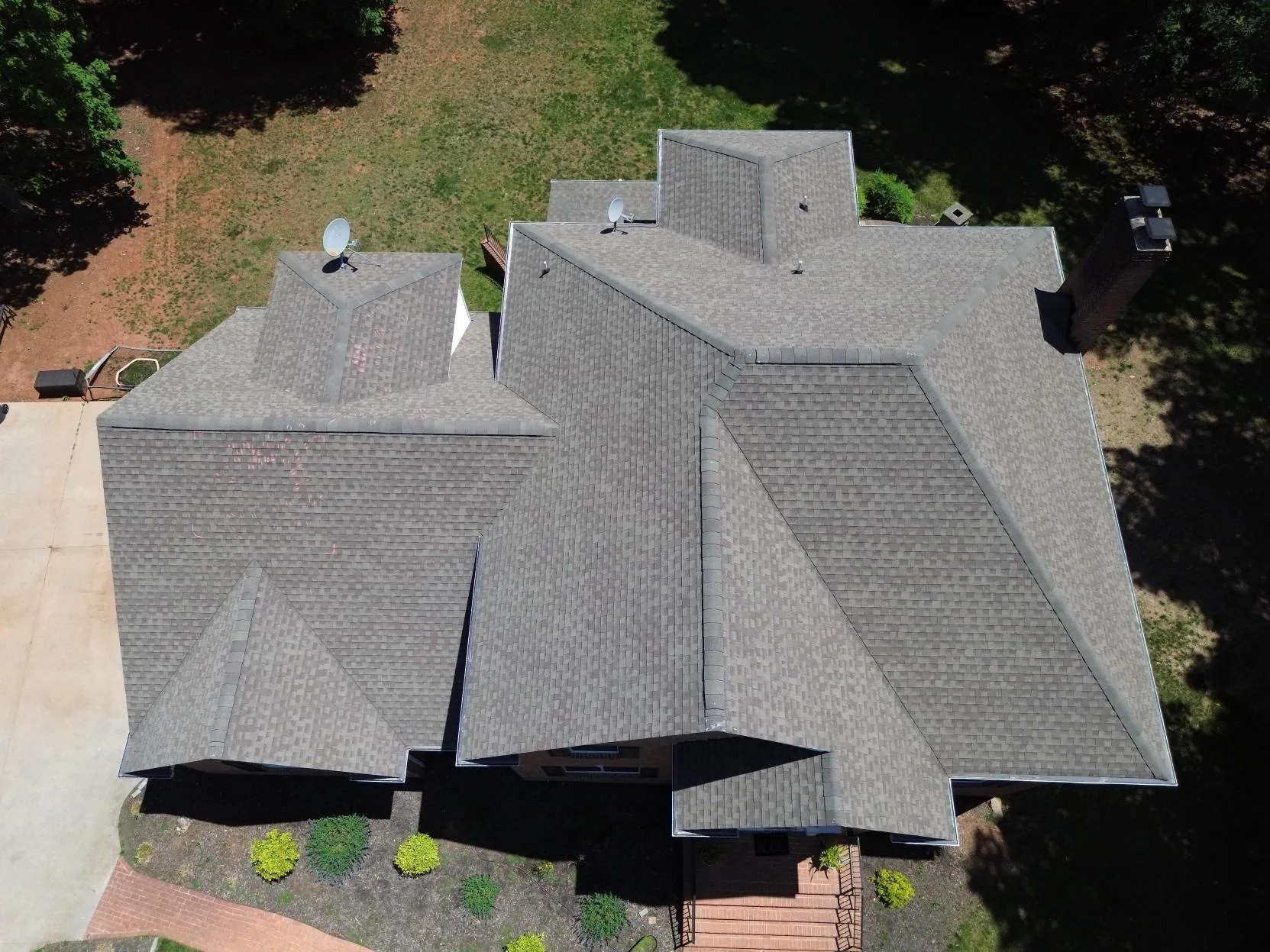
Insurance adjusters and HAAG-certified inspectors mark a 10-by-10-foot test square on each slope with chalk and count the hail hits inside it. Most carriers treat roughly eight or more hits in a test square as damage that warrants replacing that slope, and when several slopes qualify the whole roof is replaced. Test squares are why you see chalk circles and outlines on roofs in our project photos. The number of hits, the size of the hail and the age of the shingle all factor into the decision.
The first 48 hours
- Photograph the ground-level evidence and any interior water spots, with timestamps.
- Note the date and approximate time of the storm. Weather data (NOAA hail reports) will back it up.
- Do not accept a door-knocking contractor's offer to file the claim for you or to "waive your deductible." Both are red flags.
- Schedule a free HAAG-certified inspection. NVB photographs every slope, marks test squares and gives you a written report before you decide whether to file.
- If shingles are missing or water is coming in, ask for an emergency tarp. Carriers expect you to prevent further damage and reimburse reasonable tarping.
- File the claim with your carrier using the correct date of loss and cause. Then have your contractor meet the adjuster on site.
What if the roof is old?
Age does not disqualify a hail claim. A 15-year-old roof with legitimate hail damage is still a covered loss. What changes is depreciation: policies with actual-cash-value coverage pay less for older roofs, while replacement-cost policies pay the full replacement once the work is complete. Our insurance claim guide walks through both.
Where hail hits hardest in our area
Hail is a near-annual event along the I-66 corridor (Warrenton, Gainesville, Haymarket, Bristow, Manassas), the Route 28 and Dulles corridor (Centreville, Chantilly, Herndon, Ashburn, Sterling) and the I-81 Valley floor (Winchester, Stephens City, Strasburg, Woodstock). Open, newer subdivisions with little tree cover take the most damage. See our service-area pages for what we see in your town.
Get a straight answer for your roof
A HAAG-certified NVB inspector photographs every slope and tells you plainly whether you need a repair, a replacement or nothing at all. Free, written, no pressure.
Book a free inspectionRelated questions
Straight answers from 15 years and 6,000+ claims. Still have one? Ask us directly.
How big does hail have to be to damage a roof?
Hail around one inch (quarter size) commonly damages asphalt shingles, especially older ones. Larger hail damages nearly every roof it hits, and even three-quarter-inch hail can bruise aging shingles.
Can I inspect hail damage myself?
Check gutters, downspouts, vent caps and AC fins from the ground for dents, and look for granule piles at downspouts. Leave the roof itself to a certified inspector; walking a hail-damaged roof is dangerous and can cause more damage.
How long do I have to file a hail claim in Virginia?
Most policies require prompt notice and set a deadline of one to two years from the date of loss. File as soon as you have a documented inspection; waiting makes it harder to prove the date of damage.
Your roof, inspected free. This week.
A HAAG-certified inspector, a written photo report, and a plain answer: repair, replace, or leave it alone. No obligation, ever.