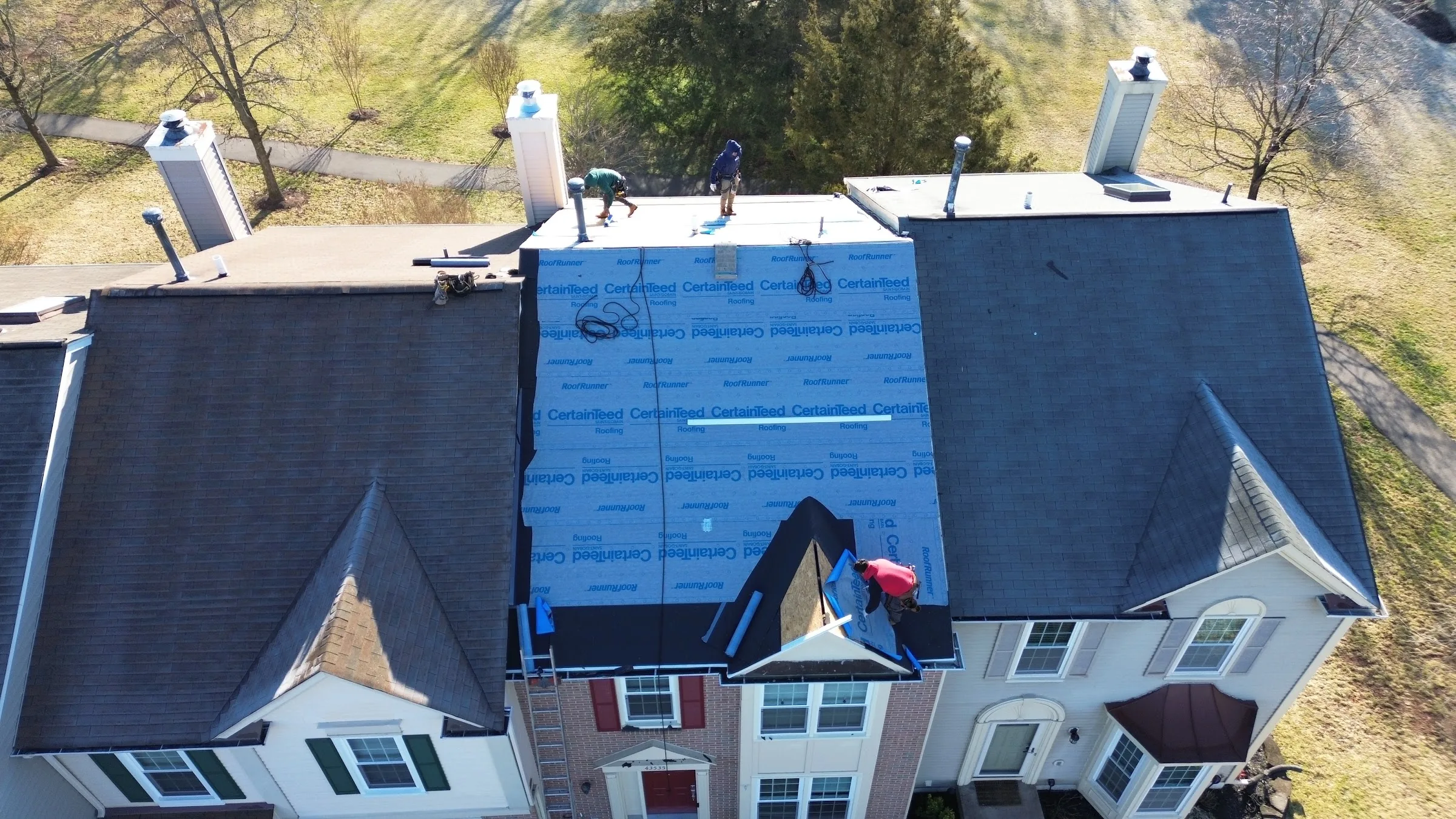
Getting your roof ready for storm season in Northern Virginia
Before Virginia's May-to-September severe storm season, clean gutters, trim limbs, replace cracked pipe boots and sealant, secure loose shingles and ridge caps, and take dated photos of every slope. After a storm, check the ground for dents and granules, tarp any openings, and get a certified inspection before filing a claim.
Why the calendar matters here
The I-66, I-81 and Route 28 corridors sit in one of the most active hail and straight-line wind zones on the East Coast. Severe storms peak from late May through August, with a second wind season in the fall and nor'easters in winter. A roof that goes into June with cracked boots and lifted shingles will leak by July.
The pre-season checklist
- Clean gutters and downspouts. A clogged gutter turns a two-inch rain into water behind the fascia.
- Trim limbs to at least six feet from the roof. Limbs are the leading storm damage cause on wooded lots in Clifton, Oakton, Burke, Gore and the Blue Ridge.
- Replace cracked pipe boots and dried sealant. Boots fail at 8 to 12 years; this $350 repair prevents most summer leaks.
- Re-seal lifted shingles and ridge caps. Broken seal strips let wind get under the shingle.
- Check flashing at chimneys, walls and skylights for gaps and rust.
- Look in the attic on a sunny day for daylight, stains and damp insulation.
- Photograph every slope from the ground with dates. Pre-storm photos make claims faster.
- Know your policy. Check your deductible, whether you have replacement cost or actual cash value coverage, and whether cosmetic metal damage is excluded.
The day after a storm
Walk the property. Check gutters, downspouts, AC fins and window screens for dents, look for granule piles and shingle pieces in the yard, and check ceilings for new stains. If anything is open to the weather, ask for an emergency tarp. Then schedule a free inspection before calling your carrier so you know whether a claim is warranted. Our hail checklist covers what to look for.
Emergency tarping
NVB prioritizes storm emergencies for same- or next-day dry-in across Winchester, Front Royal and Manassas. Tarping prevents interior damage, and carriers expect homeowners to mitigate; reasonable tarping costs are reimbursable under most policies. Call the office nearest you or use the contact page.
Long-term upgrades worth considering
If you are replacing anyway, Class 4 impact-resistant shingles resist hail and earn insurance discounts, full-deck ice-and-water shield protects mountain homes from ice dams, and standing-seam metal shrugs off wind that would strip shingles. Our metal vs. shingle guide compares the options.
Get a straight answer for your roof
A HAAG-certified NVB inspector photographs every slope and tells you plainly whether you need a repair, a replacement or nothing at all. Free, written, no pressure.
Book a free inspectionRelated questions
Straight answers from 15 years and 6,000+ claims. Still have one? Ask us directly.
When is hail season in Virginia?
Late May through August is peak season, with most large-hail events between 3 pm and 9 pm on hot, humid days ahead of a cold front.
Should I tarp my roof myself after a storm?
Only if you can do it safely from a ladder without walking the roof. A professional tarp is safer and is usually reimbursed by your carrier as mitigation.
How soon after a storm should I get my roof inspected?
Within a week or two. Damage is easiest to document while collateral evidence like dented gutters and granule piles is fresh.
Your roof, inspected free. This week.
A HAAG-certified inspector, a written photo report, and a plain answer: repair, replace, or leave it alone. No obligation, ever.