How a roof insurance claim works in Virginia, step by step
A Virginia roof insurance claim has six steps: a documented inspection, filing with your carrier, the adjuster meeting, the scope and estimate, supplements for missed items, and final payment after the work. On an approved claim you pay only your deductible. NVB has navigated more than 6,000 claims and saved homeowners roughly $60 million in out-of-pocket costs.
Step 1: Get the roof inspected and documented
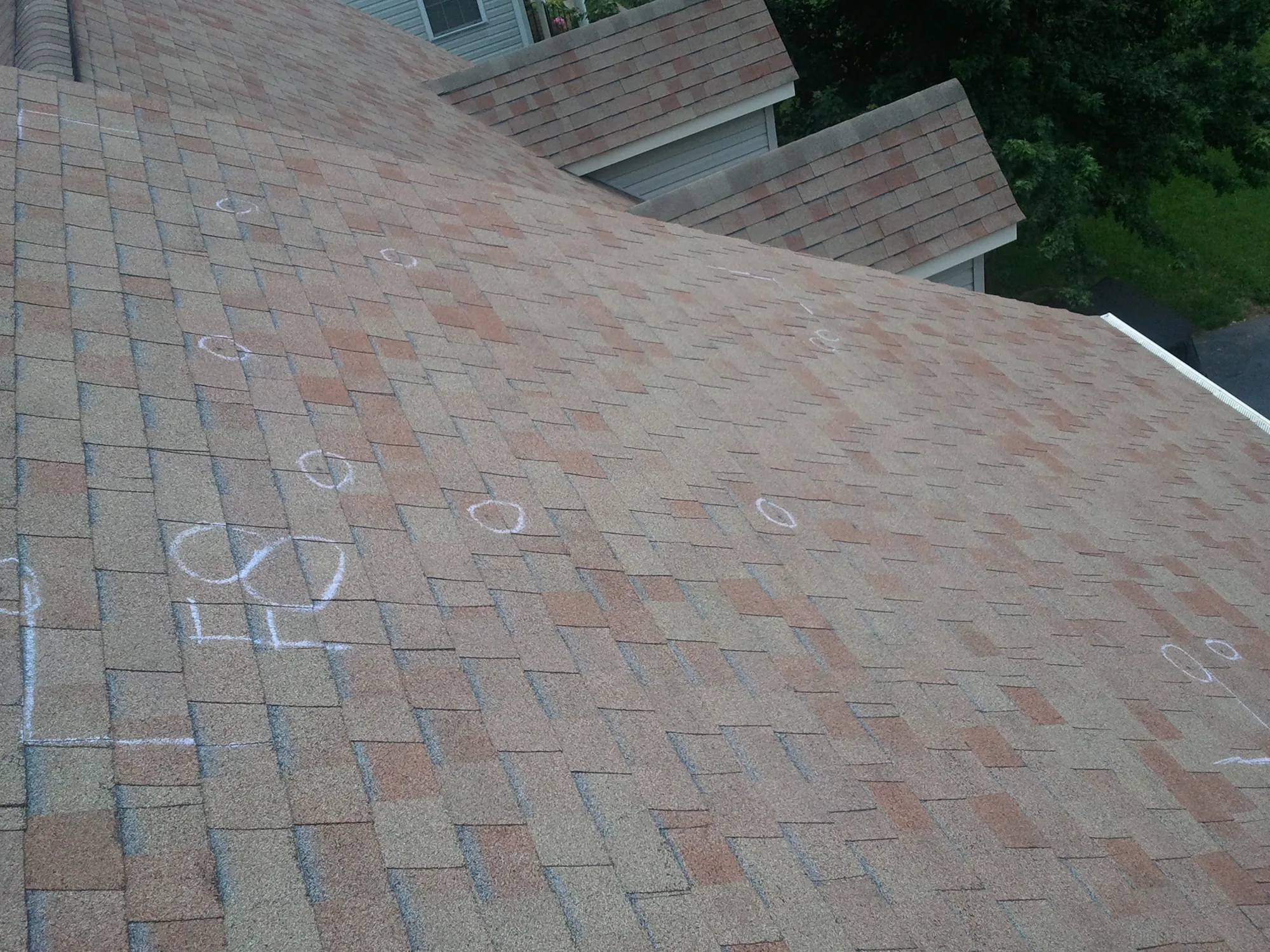
Before you call your carrier, know what you have. A HAAG-certified inspector photographs every slope, marks test squares, documents collateral damage to gutters, siding, screens and AC units, and gives you a written report. If the inspection shows age-related wear rather than storm damage, filing a claim only puts a claim on your record with nothing to show for it. About four in ten of NVB's inspections end with a repair or no-action recommendation, and we tell you that plainly.
Step 2: File the claim correctly
Call the number on your policy or file online. You will be asked for the date of loss, the cause (wind, hail, fallen tree) and a description. Use the storm date from your inspection report, not the day you noticed a leak. Describe the damage factually. Your contractor cannot file for you, but a good one will help you prepare the details that decide approval.
Step 3: The adjuster meeting
The carrier sends a field adjuster to inspect the roof, usually within one to three weeks. Have your contractor there. They walk the roof together, compare test squares and agree on what was damaged. This is where claims are won or lost: a contractor who knows what carriers look for makes sure nothing is missed, including code-required items like ice-and-water shield, drip edge and ventilation.
Step 4: The scope and estimate
The adjuster produces an estimate, typically in Xactimate, listing every line item the carrier will pay for. Review it with your contractor. Common omissions include steep-pitch charges, second-layer tear-off, decking replacement, chimney flashing, skylight replacement and code upgrades. The first check you receive is the actual cash value (replacement cost minus depreciation), and it may be made out to you and your mortgage company.
Step 5: Supplements
When the estimate misses something, your contractor submits a supplement with photos and code citations. Supplements are normal, not adversarial. Virginia adopts the International Residential Code, which requires ice-and-water shield at eaves in our climate zone, drip edge and adequate attic ventilation. Carriers pay for code-required items on replacement-cost policies.
Step 6: Completion and depreciation release
After the roof is installed, your contractor sends a completion certificate and final invoice to the carrier, which releases the recoverable depreciation. Your total out-of-pocket cost on an approved replacement-cost claim is your deductible.
Deductibles, and why you must pay yours
Virginia deductibles are commonly $1,000 to $2,500 flat, or 1 to 2 percent of the dwelling coverage on newer policies. Paying it is a legal requirement of your policy. A contractor who offers to waive or absorb your deductible is committing insurance fraud and exposing you to liability. Virginia law prohibits contractors from advertising or promising to rebate or absorb a homeowner's insurance deductible. Walk away from anyone who offers it.
Replacement cost vs. actual cash value
| Policy type | What the carrier pays | What you pay |
|---|---|---|
| Replacement cost value (RCV) | Full cost of the new roof, paid in two checks (ACV first, depreciation after completion) | Deductible only |
| Actual cash value (ACV) | Replacement cost minus depreciation for the roof's age; no second check | Deductible plus the depreciated amount |
| Roof surface payment schedule | A fixed percentage based on roof age, common on newer policies | Deductible plus the remainder |
Red flags
- Door-knockers who show up right after a storm and want you to sign an "assignment of benefits" or contingency agreement on the spot.
- Offers to waive, cover or rebate your deductible.
- Pressure to file before any inspection has been done.
- No physical office, no Virginia DPOR license number, no proof of liability and workers' comp insurance.
- A contractor who is not willing to meet the adjuster.
What NVB does for you
We inspect and document, help you prepare the claim, meet your adjuster, review the scope, submit supplements and manage the paperwork through the depreciation release. We are a GAF Master Elite contractor with a Virginia Class A license, and our HAAG-certified inspectors have handled more than 6,000 claims since 2011. Learn more about our claims service or book a free inspection.
Get a straight answer for your roof
A HAAG-certified NVB inspector photographs every slope and tells you plainly whether you need a repair, a replacement or nothing at all. Free, written, no pressure.
Book a free inspectionRelated questions
Straight answers from 15 years and 6,000+ claims. Still have one? Ask us directly.
Will filing a roof claim raise my insurance rates in Virginia?
A single weather-related claim usually has a small effect on rates, and most carriers treat storm claims differently from negligence claims. Multiple claims in a short period can affect renewal terms.
How long does a roof insurance claim take?
From filing to a completed roof, typically four to eight weeks: one to three weeks for the adjuster, one to two weeks for the scope, then scheduling and installation. Supplements can add time.
Can a contractor waive my deductible?
No. It is insurance fraud, and Virginia law prohibits contractors from promising to absorb or rebate deductibles. Any contractor offering it should be avoided.
Does NVB handle the whole claim?
We handle everything except the actual filing and the payment, which must come from you as the policyholder. We inspect, document, meet the adjuster, submit supplements and manage the paperwork to the final depreciation release.
Your roof, inspected free. This week.
A HAAG-certified inspector, a written photo report, and a plain answer: repair, replace, or leave it alone. No obligation, ever.